What to Expect When Caring for a Disabled Pet

Whether it is through age, injury, or adoption, there might come a time when you will face the challenge of caring for a disabled pet. Here is what to expect when that time comes.

Caring for a pet is always going to involve a certain amount of commitment. When it comes to a mobility-challenged pet, the stakes become so much higher. For one thing, the care of disabled pets requires significantly more time and money.

For another, the mental, emotional, and physical toll can be considerable on you as the pet owner. That is not to say that your disabled pet is not worth all of this. However, you need to manage your expectations and take an honest look at your capacity to provide the care they need.

Some facts

Before we get to the practical details of what to expect when caring for a disabled pet, you need to consider a few facts.

Animals feel no self-pity

It is natural to feel sorry for disabled pets, especially if they have not always been like that. However, animals do not have the same capacity for self-pity as humans. Disabled pets do not feel sorry for themselves. As far as they are concerned, everything is just peachy. As long as their owners provide them with reasonable care, they will live a full and happy life.

Things will change

The biggest challenge to caring for disabled pets is the capacity of owners to adjust to a changing situation. Most mobility-challenged pets have a problem going to the bathroom, so you, as the owner, will have to address this and other issues that might arise. If your pet is an amputee, you should be aware that they tend to become obese or develop osteoarthritis, so you will need to brush up on the proper exercise for them.

Support groups can help

Unless you have cared for mobility-challenged pets before, chances are you will have no idea how to manage. Support groups online can give you valuable advice and tips on coping with the extra challenges you will face. They might even help you connect with charities that can help you with costs.

Here is what to expect

Now that these facts have burned into your brain let’s get on with what to expect.

Resources are available

When you first embark on disabled pet care, you will quickly realize just how much material there is on the subject. You can get the first hand from your vet or the aforementioned support groups. You can also get a lot of sound advice from animal behaviorists, rescue animal professionals, and trainers. They have the knowledge and experience to make the transition a lot less overwhelming.

These pros will also be the first ones to tell you if you are a good fit as a pet owner with a particular disease or disability. Don’t feel bad if you get that kind of feedback. They only have you and your pet’s best interest in mind.

Costs can escalate

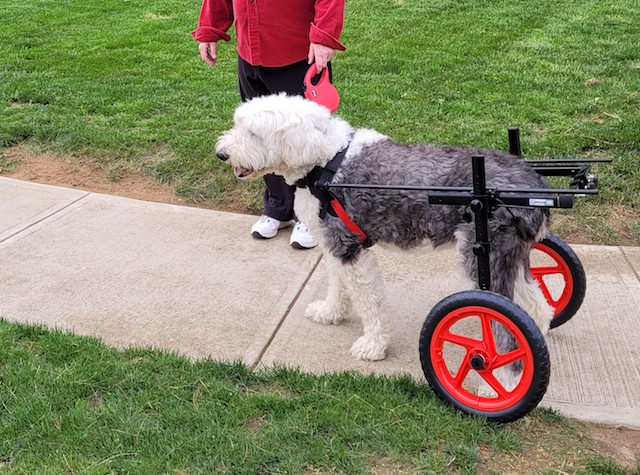
Pet disabilities can take many forms. For many pets with mobility issues, a wheelchair could be all they need to have a near-normal amount of physical activity.

However, some disabilities might require more investment in therapies, vet visits, medications, special equipment, and even food. Some pet insurance policies might cover some of your expenses, but not if the cause of the disability is a pre-existing condition.

The point is that costs can pile up when caring for a disabled pet. While you might feel that money is no object when caring for your fur baby, your bankbook might not agree.

You can get an idea of how much you can expect to spend on your disabled pet. Ask those among your support groups who have been there and done that. At the very least, you will have less of a sticker shock when the time comes to pay the piper.

Time is of the essence

The most important consideration when preparing for disabled pet care is time. Some conditions will be more time-consuming than others, so you have to keep that in mind. For example, an incontinent pet means you have to be very patient about the clean-up or diaper changes.

Just how much time can you dedicate to pet care in the long term? You cannot afford to be self-delusional here. If you have a full-time job or a houseful of children, the time element will be a significant factor in managing your expectations.  

Making tough decisions

While pet disabilities are not always a significant drain on your resources and patience, you need to know if they might be in your situation. Listing down what to expect when caring for a disabled pet can help you decide if you are up to the challenge.

However, you need to be completely honest with yourself, especially if you already own a pet with a disability. If you are not fit to care for a disabled pet, the responsible thing is to find someone with the capacity. Reach out to support groups for help with finding a good home for your pet.

If you are thinking about adopting a disabled pet, think very carefully about everything we just discussed above before taking the plunge. You might be depriving the disabled animal of the chance to find a family who can handle it.

Tags:

How to Choose a Vet for a Disabled Pet

If this is the first time you have ever had to care for a disabled pet, choosing the right vet can be a challenge. Chances are, you already have a favorite vet for your furry friends. However, some vets may not be on the same page when it comes to the lengths to which pet owners will go to care for their pets especially when dealing with special needs. Some vets may also not subscribe to alternate therapies for disabled pets that you might like to try. It is important that you and your vet see eye to eye when it comes to the proper care of your pet. Here are some things to consider.

House calls

One of the first things you need to find out is if your vet is willing to come to you. Some vets do make home visits, which is a big plus if you have a large pet. Transporting a mobility-challenged German Shepherd, for instance, is no joke. However, you might find this a rarity if you live in the city, as mobile vets tend to be in rural areas where they are used to servicing horses and other large animals. A dog wheelchair would come in handy if you cannot find a vet to make house calls.

Flexibility

You want a vet who will not make you come to the clinic for every little thing. This shows that he or she has a good understanding of your pet’s condition. As willing as you might be to bring your pet in, it actually is not a good idea to bring your disabled pet out unnecessarily as in many cases, their immune system is compromised. If your vet is willing to phone in a prescription for common medications, that will save you a lot of trouble, and some money as well.

Of course, that requires a lot of trust on the part of your vet, so make sure you are deserving of it. If there is a new development in your pet’s condition, make sure your vet is aware of it so that he or she can determine if a clinic visit is necessary.

Experience

In most cases, you want a vet that has some experience with the condition of your disabled pet. On the other hand, you also want one who is open to new ideas, and that is not always the case for veteran vets. The safe thing to do is find an experienced vet who is familiar with the latest technologies and treatments, but will not prescribe the newest thing without looking thoroughly into it. In many cases, the old ways are still the best ones.

Friendly staff

Another thing you need to consider is the staff. You want them to be supportive of you and your needs. A vet might be fantastic at the job, but if you have no rapport with the staff, then you will find the experience very frustrating. Staff members should be able to remember your pet’s history, or at least take the trouble to find out, every time you make a visit. This is to spare you the frustration of having to explain the situation every time as well as making you feel that your pet is getting the necessary care. They will also accommodate you whenever they can, from making it easy to get a prescription or squeezing you in for an emergency appointment.

Of course, you also need to be easy to accommodate. Show them appreciation for the service they give you, and be open and flexible when you need to compromise on anything. Your pet will benefit from all that goodwill.

Conclusion

Caring for a disabled pet is highly stressful albeit rewarding. Finding a vet who understands the exigencies of your situation is a treasure beyond price, but it is not easy. In many cases, you will have to do some trial and error before you find a good fit. When you do, make sure you share your good fortune with others who might be in the same situation.

Tags:

Grooming Tips for Dogs with Special Needs

One of the most important things you can do for your dog is regular grooming. This ensures good hygiene and appearance of your dog, although most of them do not appreciate it as they should!

Grooming is even more important for dogs with special needs, such as elderly or disabled dogs. They have a harder time doing any self-grooming to make them feel more comfortable. The extra attention also does wonders for their sense of wellbeing. Here are some grooming tips for dogs with special needs you can follow.

Hearing Impaired

Dogs rely heavily on their hearing as well as smell in their daily lives. Losing their hearing can make it extra hard for them to deal effectively with humans. Hearing impaired or deaf dogs tend to be more anxious than those with normal hearing, so you have to take extra care when dealing with and grooming them.

For one thing, you have to be conscious about signaling your presence to them by sight or touch to avoid startling them. You can avoid getting a nasty bite or scare by making sure they can see you before you lay a hand on them.

Give clear signals about what you are planning to do, such as showing them the hose with running water before starting their bath, or letting them smell the brush before you start grooming them.  You can also use touch to signal the part of the dog’s body you intend to work on, such as running your hand down the side of the body or legs and the neck, before you actually start.

You should also keep talking to them while grooming them.  A hearing impairment might make it difficult for dogs to hear you, but they can still feel the reassuring vibrations of your voice if you are close enough.

Take your time when grooming your deaf dog. Going slow and being sensitive to their body language can go a long way towards making the experience a safe and satisfying one for you and your hearing impaired buddy.

Vision Impaired

Dogs with vision impairment can typically navigate a familiar environment without much trouble if they have their smell and hearing intact. However, you should ensure their safety while grooming by having someone always at their side to keep them from getting into trouble, especially if they are in a strange place. If you are grooming your dog at home, it might be a good idea to do so on the floor to be on the safe side.

It does help to keep your hand on your blind or visually impaired dog at all times during grooming, especially if it is their first time to go under the clipper. Let them smell and hear the clipper a few moments before applying it to their body to keep from startling or scaring them.

Keep up a steady flow of soothing talk to keep your dog reassured and calm. Again, going slowly can help keep the experience stress-free.

Motion Impaired

Some dogs might have a problem with standing because of pain or lack of mobility. This could be due to age, joint pain, or physiological damage. In these instances, the dog will probably be most comfortable lying down during the grooming process. If that is the case with your dog, you will have to work around the situation.

Professional groomers handle this by working first on the accessible areas of the dog. They then use a harness to lift the dog and get at the hard areas such as the rear legs and undersides. You can do the same thing for your dog. If you have dog wheelchair, you might be able to use it in lieu of a harness.

If the dog signals distress or displeasure on being touched in certain areas, you have to act accordingly. It might be because the area is painful, or the dog just does not want it touched. Avoid these areas as much as possible, and have a quick and light touch if you do need to do some work on them. 

General Tips

  • Grooming is more about hygiene than appearance. Keeping the hair short and orderly and the nails clipped can prevent many health issues from developing, especially for mobility challenged dogs.
  • All dogs respond better if they are in a familiar place, but especially dogs with special needs. Try to do any grooming at home to avoid making elderly and disabled dogs anxious. Find a mobile grooming service that will make  home visits. The extra cost is well worth it.
  • You must make a point of brushing long-haired dogs regularly to avoid matting, which can make your dog’s life miserable.
  • Removing matted hair without the proper equipment can be a horrendous experience for your dog. Hire a professional groomer to do this as they have the equipment as well as experience to do it painlessly.
  • You can more easily detect physical problems if your dog gets regular grooming. These include lumps, growths, lesions on the skin, and parasitic infestations. A professional dog groomer can probably detect them more easily than you can, so make a point of having a regular schedule with one for your dog with special needs.

What You Need to Know About Intervertebral Disk Disease (IVDD)

Intervertebral disk disease or IVDD in dogs is a disease that occurs due to the hardening of the disks between the vertebrae of the spinal cord. These disks work as shock absorbers interlaced between each vertebra.

If they begin to harden, their shock absorbing function decreases causing pain, weakness or limit range of motion. Eventually, they may harden to a point where they will bulge and compress on the spinal cord, causing even more pain or disrupt nerve function to the bladder and bowel or worse cause paralysis. IVDD when it occurs happen slowly and may take a long time to become noticeable.

Symptoms

Symptoms of IVDD typically do not manifest immediately and may vary. This is why it is hard to check for symptoms of IVDD as they may occur intermittently, gradually, or just suddenly appear. Below are the most common symptoms.

  • Difficulty in moving head and neck due to pain or stiffness
  • Lowering head stance
  • Sensitivity to touch
  • Pain during movement
  • Hunched or arched back
  • Problems urinating
  • Dragging of one or more limbs when walking
  • Knuckling of paws when walking
  • Overall weakness
  • Trembling or shaking
  • Lack of coordination
  • Impaired reflexes
  • Difficulty in standing
  • Collapsing
  • Paralysis

Causes

The most common cause of IVDD is age. Like most animals, a dog’s bones become less flexible and more susceptible to hardening of the disks as they grow older. Dogs that regularly perform highly strenuous and high impact activities could be at higher risk in manifesting the disease earlier. Constantly jumping from very high places could cause acute rupturing of disks.

Breeds at Higher Risk

There are breeds that are more susceptible to getting IVDD. This is mainly due to a cartilage formation disorder called Chondrodystrophy, common to some breeds. IVDD usually occurs in these breeds between the ages of 3 and 6 years old. The following are dog breeds most at risk for IVDD:

  • Bassett Hound
  • Beagle
  • Bulldog
  • Corgi
  • Cocker Spaniel
  • Dachshund
  • Pekingese
  • Poodle
  • Shih Tzu

Although not common, other dog breeds may also get the IVDD. If they do, it usually occurs between the ages of 8 and 10. These nonchondrodystrophic breed most susceptible to IVDD include:

  • German Shepherd
  • Labrador Retriever
  • Doberman Pinscher

Diagnosis and Treatment

In order to check for IVDD, most veterinary examinations will order X-rays, neurological tests and special imaging tests such as a CT scan or MRI. For moderate cases of IVDD, treatment could include steroid treatment and anti-inflammatory medicines. Confined rest to up to six weeks may also be required.

Severe cases of IVDD may require surgery, but is sometimes not advisable for dogs that can no longer walk. In such cases, the use of a dog wheelchair is commonly recommended to give the dog a chance at a healthy and active life even with the disease.

Physical rehab is generally part of the treatment for both minor and severe cases.

Prevention

Here are some tips to help prevent or at the very least minimize the risk of dogs getting IVDD:

  • Maintain your dog’s weight. This can help reduce strain on their backs and necks.
  • Use harnesses instead of neck leashes when walking your dogs. This will also help relieve neck stress.
  • Avoid instances where your dog will need to jump down to a lower area such as ledges, tables or chairs.
  • With the help of your veterinarian, you may also consider having your dog use a back brace for added support.

Tags:

Understanding Hip Dysplasia

If you think your dog may have hip dysplasia, here are some basics you should know about the disease including the most common symptoms and treatment

What is Hip Dysplasia

It is the malformation of a dog’s hip joint. A dog’s hip joint is composed of a ball and socket joint. To give you a better idea, a human hip joint is also a ball and socket joint. As with our hip joint, range of movement can be done more or less in a circular motion.

The motion, under normal conditions, is smooth as if the ball and socket are sliding on each other. When hip dysplasia happens in dogs the ball and socket are not formed properly and because of this, instead of a sliding motion during movement, there is rubbing and grinding of the joint. This is very painful especially when moving the back legs. 

How Dogs Get Hip Dysplasia

Hip dysplasia is probably the most common skeletal problem that dogs get. Large and giant breeds are the most prone to it but it can also occur in small breed dogs. Gender is not a factor as both male and female dogs may be diagnosed with the disease. Genetics is considered a very big factor as it seems dogs with parents who have had the disease are more prone to also getting it. German Shepherds, Great Danes, and St. Bernard’s are some of the breeds prone to hip dysplasia.

Because genetics is a key factor in predisposition, hip dysplasia onset may occur early, even as young as four months old. Much older dogs may also get it as a result of other health problems such as osteoarthritis. Obesity and lack of exercise are also considered as risk factors.

Symptoms of Hip Dysplasia 

Check your dogs for the following behavior:

  • Less active then usual
  • Has difficulty
    • getting up
    • running
    • jumping
    • climbing stairs
  • Weakening of back limbs
  • Hopping or swaying gait when walking or running
  • Back legs unnaturally close together when standing
  • Pain in hip joints
  • Grating sound when moving back limbs
  • Decreased range of motion in the hip joints
  • Loss of muscle mass in thigh muscles
  • Enlargement of shoulder muscles due to front limbs compensating for weakness of back limbs

Risk Factors of Hip Dysplasia

As we have already stated earlier, genetics is one major factor as well as size. Obesity and rapid weight gain is also a factor as well as lack of exercise.

If you suspect your dog may be suffering from hip dysplasia bring them immediately to your veterinarian for a check-up. Be prepared to give them details that will help in diagnosis such as health history, recent injuries and their parent’s history.

Treatment of Hip Dysplasia

Treatment may include weight reduction, physical therapy, medications for pain relief, acupuncture, and the use of mobility aids. Treatment must be under the supervision or approval of your dog’s veterinarian.

Tags:

Do Disabled Dogs Need Dog Shoes?

Are dog shoes really necessary? Many pet owners are buying dog shoes for their pets, believing it essential as it gives their pet’s paws added protection. Others question the trend. There are those who feel that dog shoes are just fashion accessories imposed on dogs by their owners. For disabled dogs, this question becomes even more important.

For dogs that can stand and walk normally on all four legs, the need for dog shoes may depend on the environment they live in. The terrain and weather may make dog shoes necessary. With extreme temperatures, floor surfaces, as well as slippery and muddy ground, it may make some sense.

It may be even more necessary for disabled pets. Because of the challenges that disabled dogs have to live with on a daily basis, dog shoes may be a necessity for most of them. Dog shoes can:

  1. Help prevent slips and falls – Dog shoes are usually designed with non-slip soles. This gives disabled dogs added support and stability when standing, keeping their legs from slipping apart.
  2. Give better traction – The non-slip nature of dog shoes also helps give disabled dogs a better grip on the walking surface, especially while in a wheelchair. This is especially helpful when they are walking on smooth and slippery floors.
  3. Give added leg support – Many dog shoes are also designed to wrap around and support the paw joint area.
  4. Prevent scrapes and wounds – This is the most common advantage of dog shoes. Since most disabled dogs tend to drag their non-mobile limbs behind them, this can result in scrapes and cuts on the skin and damage to the nails. This is especially worse for active dogs that need to run around, with or without their wheelchair. Wearing dog shoes helps protect the paws as they drag them on the floor.
  5. Help in the healing process – For dogs recovering from surgery or undergoing physical therapy, using dog shoes helps in the recovery process. This is because the shoes give them added support during therapy.

Check out this dog boots review from Wirecutter

This article was updated on March 11, 2019

Tags:

A Guide to Bathing Your Disabled Pet

Most dogs and parents dread it, but it’s something that has to be done. We’re talking about giving our dogs a bath. It’s a very important routine, more so for disabled dogs than regularly mobile dogs because of the challenges the former faces on a daily basis. Giving them regular baths is not only good for their hygiene but also for their overall health and comfort. Here are some tips on how we can give our best friend a proper cleaning.

Make a Regular Schedule

For most dogs, regular bathing is generally once a month. For disabled dogs, it usually has to be more frequent, at least twice a month or even more. This is because disabled dogs get their coats and skin dirty faster. Most of them have partial or no control of their limbs. Many drag a part of their body, typically the hind legs, and doing so gets this area more prone to dirt. Also, because of their limited mobility, they often get dirty from their own pee or poop. In many cases, disabled dogs don’t even realize that they are wallowing in their own dirt. In some cases, dog owners are also unaware that their disabled pets soaked in their pee, especially when it has already dried off.

Add to that the unavoidable small accidents that occur due to a pet’s disability such as spills and falls.

How Often is Regular

You need to bathe your dog regularly. How often is regular? It greatly depends on your dog’s lifestyle. For example, if your dog likes to roam around all the time and gets their fur dirty often, then twice a month is not enough. Regularly check the condition of our dog’s skin and fur to find out how fast they get dirty after each bathing session in order to find the right interval.

In Case of Emergency

When you do find the right schedule, it does not mean you have to stick to it faithfully, especially if your dog gets into an accident. If our dog gets dirty in an isolated area, it may not be necessary to give them a full bath. In such cases, you can simply clean them off with baby wipes or a wet towel. For major pee and poop soiling, though, a full bath may be necessary.

The Right Shampoo

Because they need more frequent baths, the skin of your dog may be prone to problems such as dryness or rashes. This is why it’s important to find a product suited to your pet. Unless specifically instructed by your veterinarian, never use shampoos for humans to bathe your dog. Often, a no-tears shampoo is good for using on your dog’s head and face and a moisturizing dog shampoo for the entire body. Consult your vet before choosing a shampoo for your dog.

Water Temperature

When giving your dog a bath, the temperature of the water is also an important factor to keep them calm and comfortable. Too cold or too hot and it could upset them and cause them to associate bath time with discomfort. On the other hand, many disabled dogs also have partial or full loss of nerve function so they may not be able to tell if the water is too hot or too cold, which may also cause skin problems. As a rule of thumb, use warm or tepid water for your dog’s bath.

Positioning Them for the Bath

Bath position may seem like a weird concern, but remember you are bathing a disabled dog. Most of them are unable to place themselves in a comfortable position during the process. There is the possibility of getting their nose, eyes and ears wet, which may cause more discomfort or even drowning. The aim is to position your dog so that they are comfortable and ensure that their head is high enough to avoid accidentally dipping their nose, eyes, and ears in the water. If your dog cannot sit up at all, put it on its side and elevate the head using a waterproof non-slip pillow to keep it above the water. Check that your dog’s legs are straight and in a comfortable position, and that the tail can move freely.

Check the surface you bathe your pet on. Avoid anything that might cause an accidental slip or slide, that’ll make the bathing process harder than it needs to be.

Pick a tub that’s big enough to ensure the comfort of your dog. A non-slip mat goes a long way to keeping everyone safe. Depending on you dog’s size, bath time can be done in your own bath tub, in the sink, or a small wash tub or basin. Again, make sure to place your dog so that its head is higher than the rest of its body.

Giving Your Dog a Bath

When all is set, begin by getting your dog wet from the head to paws. If you are using a hose, make sure the water pressure is gentle enough to avoid hurting your dog. You should also direct the spray in an oblique angle to lessen the pressure.

Avoid getting the nose, eyes, and ear holes wet. After getting your dog’s entire body wet, start shampooing the head with a no-tears shampoo. Start on the face, behind the ears and head, avoiding the nose, ear holes and eyes. Rub and massage in the shampoo following the direction of the fur coat. Shampoo the rest of the body with the same motion using the moisturizing dog shampoo.

Rinse with water starting from the head to the limbs, again avoiding the nose, eyes and ear holes. Make sure to rinse off all the shampoo by rinsing twice. After rinsing, place your dog in a comfortable position on a thick dry towel and gently rub dry.

Now you have a clean, dry, happy dog!

Tags:

Canine Hydrotheraphy: The What and Why

We became a bit curious about hydrotherapy when we found an interesting article on it, so we decided to find out more about this method of therapy and rehab to see if it is a good option for our handicapped best friends. We’ve done some research and come up with this brief but hopefully informative article.

What’s It About

Hydrotherapy, as the term implies is a method of physical therapy or physical rehabilitation making use of water as a medium. It has been in use for quite a long time now for people and is slowly gaining popularity for animals such as horses and dogs. It takes advantage of the properties of water to help the patient to recovery muscle mass, blood circulation and joint movement. The most important advantage of making use of water for therapy is its buoyancy, which creates a low gravity environment, thereby helping the patient focus on the limbs that needs therapy. It also lessens the friction on the joints during sessions.

It has been proven to be effective in helping many dogs with various problems and complications. It is a beneficial form of treatment for dogs recovering from injuries and/or operations, those who have degenerative joint problems, and even paralyzed dogs. It is very beneficial for old dogs with arthritis and is has also been proven to be effective as a weight loss program for overweight dogs.

Types of Hydrotherapy for Dogs

There are mainly three types of hydrotherapy for dogs: whirlpools, dog pools and treadmills.

WHIRLPOOLS

This is mainly used to help dogs get accustomed to the water environment. The water temperature is regulated based on the nature of treatment. It is a safe and relaxing environment, but at the same time provide just the right kind of stress for effective rehabilitation. A trained medical professional assists the dog while in the whirlpool and performs the therapy.

DOG POOLS

This is similar to a swimming pool for people where dogs can learn to swim, do laps, and play catch. The dogs wear life vests and the therapy sessions are supervised by trained medical professionals.

TREADMILLS

This is usually a transparent glass tub with a treadmill inside. The dogs, with a life vest on, is placed inside the tub on the treadmill, and then water is allowed to pour in up to a height a little above the dog’s limbs, covering part of the body below the neck. The treadmill is then turned on to make the dog walk while supported by the water.

Benefits of Water Therapy

Based on our research, water therapy is a very effective method of physical therapy for various kinds of muscle and joint problems as well as for weight loss programs for dogs. It is very effective because it is an environment that effectively addresses the difficulties associated with physical therapy, such as the impact of gravity and increased friction on the joints during exercise. It also increases the efficacy of exercises due to the increased resistance water creates compared to air.

Is It Good for Your Best Friend?

Clearly, hydrotherapy is something worth exploring and considering to help your best friend get the exercise it needs when faced with physical limitations. The best first step is to consult your veterinarian and find out more about this type of therapy, as well as other options available in your area.

Tags: ,

Giving Your Disabled Pet a Normal Life

It may seem like bitter irony to be thinking of “normal” when your pet can’t walk or is otherwise disabled. Yet your pet may not even realize that they are disabled, and will usually adapt to their new restrictions quite easily. They take each day as it comes without much thought, and may be perfectly capable of leading a healthy and happy life despite their disabilities.

It’s true that they will need special care, with you as the service person. However, they are incapable of feeling sorry for themselves, unlike most humans. The best thing you can do for your pet is to give them a normal life and enjoy their company.

Blind pets

Dogs rely more on their sense of smell rather than their sight, so blindness may not affect them as much as you might think. In fact, it may be some time before you even realize they’re blind. The case is otherwise for cats, but you can help them adjust by making a few changes in the surroundings.

  • Encourage their sense of smell by hiding distinctively scented treats in toys, motivating them to “follow their nose”
  • Clear hallways and floors of clutter to give them passage with a minimum of bumps
  • Acclimatize your pet to the layout of the home by leading them around them several times
  • Continue to take your pet for walks, but make sure they stay close and on a leash to control encounters with aggressive animals
  • Talk to your pet to give them a sense of security
One heartwarming pair, Glenn and Buzz.

Deaf pets

Both dogs and cats have acute hearing, and unless they were born deaf, you will both need some retraining to cope with its loss.

  • You have to learn to use hand signals to take the place of spoken commands, so practice with your pet
  • Get their attention by touching them or making eye contact; try not to sneak up on them by taking firm steps they can feel
  • Keep one light on at all times where your pet stays to give them a sense of security

Mobility-impaired pets

Mobility impairment is actually a much bigger challenge for your pet than the loss of sight and hearing because it essentially makes your pet helpless. Whether the impairment is temporary or permanent, in order to give your mobility-impaired pet a normal life, you need to make some significant changes in their routines.

  • Consult a vet for a long-term prognosis of your pet’s condition to better understand how to give them a normal life
  • Establish a regular routine to give them a sense of structure and security, and keeping your pet from feeling anxious
  • Bathe them regularly, especially if they are unable to do their business on their own or incontinent
  • Learn to express their bowels and bladder to make your pet more comfortable
  • Check your pet’s hair and skin regularly for any signs of sores or wounds resulting from always lying down or dragging their paralyzed limbs around
  • Consider alternative therapies such as acupuncture and massage, especially if the impairment is a result of surgery and temporary to keep the muscles supple
  • Give them plenty of opportunities to go outdoors and socialize with other pets; you don’t have to worry about teasing
  • Regularly check forums for disabled pets for support, tips and suggestions from other pet owners

You should also consider mobility aids such as dog wheelchairs appropriate for your pet’s size. It may be a bit of an investment, but it will give them much more freedom and dignity than carrying them all the time. It will also make your pet healthier physically and psychologically, and save you back problems later on. You only have to check out the videos of dogs in wheelchairs and you will realize how much difference it can make to your pet’s life.

Conclusion

The most important thing you can do for your disabled pet is to be patient with them as they adjust to their impairments. It can require considerable commitment in money and time on your part, but it will all be worth it.

Tags:

Disabled Dogs and Potty Problems

One of the major issues you will probably have to deal with if you have a disabled dog is incontinence. Number two is especially an issue, as the mess can be considerable.  If you’re one of those people with a pathological fear of getting dirty, then you may find the following article hard to swallow. However, if you’re determined to keep your disabled dog, then you will just have to suck it up (thankfully, not literally!).

The best way to deal with your dog’s potty problems is to take control. Learn to express the bowel so that your dog will do its business under controlled conditions. It’s not as hard as it sounds. It’s actually quite similar to stimulating the poop reflex in babies, although babies don’t bite, so dogs can be a bit challenging. If you put forth the effort, however, it can pay dividends.

Stimulating the reflex

When you express the bowel, it’s tantamount to saying “It’s time to go.” There are several ways to do this, but it all involves some touching and squeezing of the dog’s anus, so you will need gloves (preferably the thin disposable latex ones used by vets). You may also need:

  • Squirt bottle
  • Baby wipes
  • Paper towels or old newspapers
  • Cool (not cold) water
  • Petroleum jelly

METHOD 1

If your dog is small, this is probably the easiest and neatest way to get it to give it up. Hold your dog over the toilet bowl with its butt in the clear over the water (make sure the tail doesn’t make splash down first!) in the crook of your arm so you have a clear field of view. Your dog may struggle at first, so make sure you have a firm grip or you might end up with it in the toilet

When you’re ready, find the anus opening and with your other hand (gloved), gently push down on the tissue around it. If you feel something solid, then your dog has something for you. Make a pincher of your fingers and squeeze the hole shut and release several times, pulling outward all the while. If your dog has anything to give, it should plop (or ooze) out at some point.

METHOD 2

If your dog is bigger, this may be a more practical method. Put some cool (not cold) water in a squirt bottle. Adjust the nozzle so it produces a stream rather than a spray. Place your pet on an old newspaper or several sheets of paper towel, and lift the tail to find the anus. Squirt the cool water in the opening, and you should see it pucker. Do this several times to get the anus going. You can also use baby wipes to add to the stimulus. Do it long enough (and presuming your dog has anything in there), you should get satisfaction soon enough. After the business is done, simply fold up the newspaper or paper towels and dispose.

METHOD 3

A simpler method, requiring less effort, is using an ice cube. Do the same as with Method 2, but instead of using a spray bottle, have an ice cube ready. Place it directly on the opening and keep it there. When you feel some pushing against the cube, then you have success. This is especially useful in large dogs, because their poop is going to be proportional to their size, so you don’t want your face anywhere too near the opening!

METHOD 4

This is the last resort when none of the above methods work for your pet. It involves direct stimulation of the sphincter (just the outer one, don’t worry), which means inserting your finger slightly into the anus. Do the same as for Methods 2 and 3, but instead of water or an ice cube, you will need lubricant. Rub the end of selected gloved finger with petroleum jelly and insert in the opening. Go in just a centimeter or two, don’t go prospecting! This is just to stimulate the reflex, you’re not trying to pull it out yourself! You may have to wait a while, but it will come.

Important tips

You should stick to a regular time and place for expressing the bowel to get your pet used to it. Pets can be stressed when they are presented with a situation they don’t understand. It will also make your pet more “regular.”

The best times to express the bowel are in the morning and just before bedtime. However, each pet’s system differs, so you may have to go through a bit of trial and error to find the optimal times to get it to do doodoo.

You may have to change your pet’s diet if the stool is too hard or too soft. In either case, it’s just more work you don’t need. Dried food may be your best option, but not all brands produce the ideal type of stool (solid, low odor). Some people swear by Science Diet w/d, while others recommend Bil-Jac. Again, trial and error is in the cards. 

Tags: