Understanding Dog Food Labels

We are becoming more aware of the value of checking the label before buying food products for our consumption and our pets. More dog owners are more conscious about what their four-legged friends eat to keep them healthy and happy. But do you really understand what you are reading?

To help you understand these labels better, we have come up with a list of the most common terms included in commercially available pet food products. We briefly explain what they mean and their relevance to your primary concern, your pet’s health.

Who Checks the Labels

First, let’s understand how these labels are produced by understanding the basic guidelines pet food manufacturers need to follow.

Two major organizations regulate the ingredients of dog food products. The Food and Drug Administration (FDA) is the institution that checks on the federal level. On the state level, most follow the guidelines set by the Association of American Feed Control Officials (AAFCO), a private non-profit organization, to study, determine and quantify the ingredients animal feeds. The two organizations constantly update their guidelines by regularly conducting safety reviews.

The US Department of Agriculture (USDA) will also come into play if a dog food product claims to be Organic. For these instances, The National Organic Program of the USDA will check if the product meets their standards for organic products.

List of Packaging Words and Phrases

Reading through the labels can be challenging to understand as the language on these dog food products. The word used on the labels can be very confusing for many consumers. We listed and categorized the most commonly used words and phrases plus vital information to help you figure out what is good and what is not so good for your pet.

Regulated Words

The words and phrases listed here are regulated and must pass specific standards to allow the manufacturer to use them. If these words or phrases are on the label, they meet the standards set by their corresponding regulating body.

Organic –Under NOP guidelines, pet foods that are Certified Organic must contain at least 95% organic ingredients. The process of growing and handling organic ingredients must also be satisfied. Manufacturers of pet foods may use the term “organic” if they satisfy the manufacturing and handling requirements of the NOP.

According to the AAFCO, dog foods can be labeled “Human-Grade” if the ingredients are fit for human consumption and the production process follows regulations suitable for human consumption. In other words, the facilities, procedures, and materials used must pass the same requirements when producing food products for human consumption.  This is actually rare and not even necessary as food requirements for a dog are different from humans.

Unregulated Words and Phrases

Any third party does not regulate the words and phrases listed below. This means that manufacturers describe their products using these words and phrases without having to prove it is true or not.

All-Natural, 100% Natural or Natural – Stating this means that the source of the ingredients must be all-natural, and the production process must be done by natural means as well. If such claims are accurate, all-natural products may lack critical vitamins and minerals needed by dogs since most are synthetic hence not naturally manufactured.

Holistic or Wholesome –it is supposed to denote a complete and balanced approach to health. In most cases, such claims can be tough to prove, especially since most pet foods cannot exhaustively list the source, production process, and quality of their ingredients to prove that they are holistic.

Common Terms

Amino Acids –Dogs need certain amino acids as part of their daily food intake to maintain their health. Most of these amino acids can be found in many protein-rich foods such as meat. Many dog food manufacturers include a list of amino acids included in their products. Here is a list of the essential amino acids for dogs that you might want to look for on your dog foods label.

  • Arginine
  • Histidine
  • Isoleucine
  • Leucine
  • Lysine
  • Methionine
  • Phenylalanine
  • Threonine
  • Tryptophan
  • Valine

Animal (Meat) Products –Dogs need sufficient protein in their diet, which they usually get from animal products. Listed here are the different categories as defined by the AAFCO.

  • Animal By-Product Meal –composed of animal tissues
  • Animal Digest –by-products of the degradation of animal tissue
  • Dried Egg Product- as the phrase implies, it comes from dried eggs removed from eggshells
  • Meat – Any muscle from mammals, including the blood vessels, diaphragm, esophagus, fat, heart, nerves, tongue, and skin
  • Meat and Bone Meal- Any bone and other tissue from mammals
  • Meat By-Products –any unprocessed body parts of mammals, which include bones, blood, and other organs
  • Meat Meal – all mammal tissue
  • Poultry – Any muscle from domesticated birds, which may include the blood vessels, diaphragm, esophagus, fat, heart, nerves, tongue, and skin
  • Poultry By-Product – Whole poultry carcass, which includes feet, head, and organs
  • Poultry By-Product Meal – tissue from poultry, which includes undeveloped eggs, feet, neck, and other organs
  • Poultry Meal – any poultry tissue that does not include the feathers, feet, head, and organs

Fats and Oils –These are necessary to your pet’s health since they give energy and other health benefits. Fats and oils also have the added benefits of making dog food more palatable and fun to eat. Listed below are some of the essential fats and oil.

  • Omega-3 and Omega-6 – antioxidants that help prevent inflammation and promote healthier hair, skin, and joints
  • Animal fat – the primary source of Omega 6 fatty acids. It may also come out as chicken, beef, or pork fat on the product labels.
  • Coconut or Palm Kernel Oil – This may help improve cognitive function in senior dogs
  • Fish Oils – This is a primary source of Omega 3 fatty acids. Also called salmon oil.
  • Glycerin – has no health value; used mainly to keep the food soft and moist.
  • Vegetable Oils – Also a source of Omega 6 fatty acids;  may also present as canola oil or sunflower oil

Gums –These help keep your dog’s colon and intestinal system healthy.The most common types of gum used on dog food are carrageenan, cassia, guar, and xanthan.

Hydrolyzed Protein –This type of protein is hypoallergenic, easy to absorb, and digest extracted from vegetables and poultry feathers.

Legumes –A variety of beans or lentils used as an alternative to grains, it may include any of the following:

  • Pea fiber – Insoluble fiber derived from ground pea hulls
  • Pea protein – Source of iron and lysine to promote healthy muscles and build immunity
  • Soybean flour – Source of various vitamins and minerals such as essential amino acids, fiber, fatty acids, B vitamins, potassium, and protein.

Minerals –Mineral supplements are usually added to dog food. For example, sodium chloride is typically added to stimulate increased water consumption. The most common minerals added to dog food in varying amounts are Calcium, Chloride, Magnesium, Phosphorus, Potassium, Sodium, Sulfur, etc. Other

Natural Flavors –Typically in the form of broth or spices, this can be a combination of any ingredient to enhance the flavor of the food that must comply with AAFCO’s standard for natural ingredients.

Plant Products –These products are the primary sources of carbohydrates, fiber, and even some protein in dog food. Here are some of typical plant products found in dog food.

  • Cellulose – Fiber source that also prevents your dog from overeating
  • Grains  – Refers to any grains such as barley, corn, oats, rice, rye, or wheat
  • Grain By-Products – This may refer to any of the following:
    • Bran – Contains fiber, Omega-3, minerals, and vitamins
    • Endosperm– Contains starch and gluten, sources of energy and protein
    • Hull– Roughage
    • Meal and flour or ground grain – Contains high starch levels for energy
    • Middling – By-product of milling grain; Good source of fiber, protein, and phosphorous
  • Whole Grain – No part of the grain is removed.; bran, germ, and endosperm of the grain are intact
  • Refined Grain – bran and germ are removed; retains only the endosperm
  • Corn – This can be any of the following:
    • Corn flour, cornmeal, whole corn, or ground corn – Source of carbohydrates for energy
    • Cornstarch –Hypoallergenic product used as a thickening agent
    • Corn gluten – Source of protein

Preservatives –These areingredients used to preserve food longer and increase its shelf-life. Common natural preservatives include ascorbic acid, calcium propionate, and mixed tocopherols, while artificial preservatives, which tend to be more effective, include BHA, BHT, and Ethoxyquin.

Probiotics –These are beneficial bacteria introduced to the GI tract. They promote a healthier digestive system. They also help prevent inflammatory bowel disease and gastroenteritis and decrease the effects of food allergies. Examples of probiotic formulas are bifidobacteria, enterococcus, and lactobacillus.

Root Vegetables –This may include any of the following:

  • Beet pulp – Contains fiber
  • Cassava root flour –Contains carbohydrates for energy and minerals such as iron, manganese, and zinc
  • Potato protein – May be added for prescription pet foods
  • Potato starch – Used as a substitute for grain
  • Potatoes – Contains carbohydrates for energy

Vitamins -Vitamin supplements are also usually added to the label and are typically shown by their popular names such as Vitamin B, C, or Biotin.

If you want to dig deeper, check the Guaranteed Analysis, which you will find on all commercially available dog food labels. Look for the AAFCO Nutrient Requirements for Dogs and compare it with the label’s Guaranteed Analysis. If the percentages in the Guaranteed Analysis are within the AAFCO standards, then the dog food is probably a good choice. 

Special Diet for Disabled Dogs

The recommended nutrient values for dogs typically hold true across all breeds. The difference is the amount of food you give based on their size. Smaller dogs tend to have a higher metabolism, so they need relatively more calories than large ones.

Most commercial dog food would provide the recommended quantities per weight range right on the label. Your dog might want more or less than the suggested amount, depending on individual peculiarities. You will be able to tell either way if your dog is gaining or losing too much weight. Check out the typical weight range according to breed and gender here.

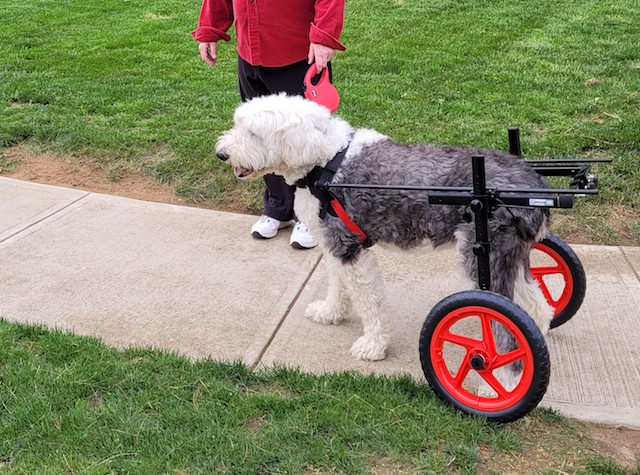
But another factor that might come into consideration is the activity level. Dogs with high activity levels will require more fat than sedentary dogs, so pay special attention to the fat content in the Guaranteed Analysis. Disabled dogs typically qualify as sedentary because of their limited mobility, unless they regularly use dog wheelchairs, in which case they should do fine with the regular diet for a dog their size.

Final Note

Knowing what is on the label and understanding what they mean and their purpose will definitely help, but there is a faster and shorter way of finding out if the dog food you are checking is safe and healthy for your dog. Look for the following phrase “This product is formulated to meet the nutritional levels established by the AAFCO Dog Food Nutrient Profiles.” If you see this, you have the assurance that a specific dog food product is safe and healthy, providing a complete and balanced meal.

As always, when in doubt, consult with your vet. Your dog might have special needs you don’t know about that would affect your choice of dog food ingredients.

Tags: ,

The Lowdown on Pet Wellness Plans

Most pet owners know the costs associated with pet care. Vet visits, treatments, and medications can really roll you up when your pet gets sick. Pet insurance covers many healthcare costs when something goes wrong. However, the saying that an ounce of prevention is worth a pound of cure is true in many cases. Pet wellness plans represent that preventive ounce you should consider, ensuring the well-being of your pets and pocketbook.

What is a pet wellness plan?

A pet wellness plan is preventative. It helps cover the cost of regular vet visits and pet health care. Depending on the plan, it could cover the following services:

  • Wellness examinations
  • Routine blood tests
  • Routine vaccinations
  • Spaying or neutering
  • Parasite screening and prevention
  • Microchipping
  • Nail and ear cleaning
  • Dental cleaning
  • Heartworm prevention

The point of a pet wellness plan is to keep the pet as healthy as possible to avoid future problems or developing diseases. It does not cover emergencies such as injuries or unexpected events such as degenerative diseases

Most pet wellness plans require pet owners to pay for services upfront, and the plan provider will reimburse it upon receiving the invoices. In some cases, the plan provider will provide the covered services, so there is no need for reimbursement. Wellness plans typically have a cap on annual benefits.  

What’s the difference between a pet wellness plan and pet insurance?

Pet wellness plans focus on prevention, while pet insurance covers unexpected events like accidents and illnesses. While plans differ by provider, below is a general comparison of what pet wellness and pet insurance plans cover.

Pet WellnessPet Insurance
Annual examsAccidents
Spay/neuterIllnesses
Routine blood workEmergency care
Heartworm screeningCongenital and hereditary conditions
Fecal testingOrthopedic conditions
UrinalysesPrescription medications
Routine vaccinations  such as rabies, Bordetella, giardia, DHLP, parvo, LymeX-rays, MRIs, CAT Scans, Ultrasounds, etc.
Teeth cleaningRehabilitation and Therapy
Flea, tick, and heartworm treatmentsSurgical procedures
MicrochipHospitalization

Are Pet Wellness Plans Affordable?

The costs of a wellness plan will depend on the provider and coverage, but a subscription typically costs between $15 to $35 a month for an adult dog. You can use your pet wellness plan on its own or combine it with pet insurance to cover all your bases.

In most cases, you prepay for pet wellness services, so it is to your advantage to ensure your pets get regular wellness checks and screenings. In addition, pet wellness services keep incipient diseases or conditions from getting worse, generally reducing treatment costs.

Some Pet Wellness Plan Providers

Like pet insurance, pet wellness plan providers offer catch-all plans for anyone in any or most states in the US. However, before committing to a subscription, ask your vet if they offer a pet wellness program. You might get a better deal, and you’re putting your money back into your community. If that is not possible, consider one of the plan providers below.

PawPrint

PawPrint offers a pet wellness plan that comes with an app, so it is easier for pet owners to set appointments and medication reminders and access health records. The plan uses the reimbursement model, so you need to pay upfront for services. The advantage is that you can go to any vet or lab for routine checkups and testing at your convenience.

The monthly subscription for PawPrint Wellness is $20 and covers more than $400 worth of services a year. Check the website for a complete list of covered benefits.

Overall, PawPrint Wellness is an affordable and convenient way to keep your pets healthy. The app is a nice touch.

Wagmo

Wagmo offers both pet insurance and pet wellness plans. The standalone pet well plans offer typical services under three price tiers: Value, Classic, and Deluxe.

The subscription plans differ in the annual cap for reimbursements. Value is $20 a month with a cap of $350. Classic is $36 a month with a cap of $650. Finally, Deluxe is $59 a month with a cap of $1,100.

Some services are only available for Classic and Deluxe, including urinalysis, grooming, and parasite medication. Overall, Wagmo is a bit pricey and not available in all states.

Check the Wagmo website for more details on their covered services under each plan.

Nationwide Pet Wellness

Nationwide Pet Wellness is under the umbrella of a national health insurance brand, but it is a standalone product. You do not have to purchase pet health insurance to avail a pet wellness plan.

Its pet wellness plan covers standard checkups and services at the cost of $12 to 18 a month for up to $400 annual reimbursements for the Basic Plan. The Plus plan costs between $17 and $22 for up to $550 yearly reimbursements. The plan cost will depend on the pet species and state.

While this is the most affordable plan on the list, you should consider that reimbursements may take a long time. Because it is under a traditional insurance company, the process typically goes through many stages before you can get your money back.

Check the Nationwide Pet Wellness website for a complete list of covered services and conditions of service.

Summary

A pet wellness plan is an excellent idea to ensure your pet’s continued good health and well-being. The $20-odd you will spend on a monthly subscription is well worth it, as healthcare costs will be more than that in the long run. In addition, having one will motivate you to give your pets routine care.

Tags: , ,

Should I Get My Dog a Winter Coat?

I’m a new fur mom, but I grew up with a lot of big dogs (my brother was a breeder), so I’m not really into putting my Yorkie into one of those costumes where they look like they’re walking in two legs (as adorable as they look). However, with the nip in the air, I did start to wonder if perhaps a winter coat might be necessary for my dog as other people seem to think. Here’s what I found out.

The real reasons people wrap up their dogs

Putting a winter poncho for your pooch is usually a case of projection for some fur parents. Because they feel cold and bundle up when walking their dog, owners feel emotional distress when they see their pets without protection. Most people decide to hedge their bets and wrap up their dogs as warmly as they can before venturing out into the cold, cruel world.

However, most people just like to see their fur babies in fashion. Pet owners in the US spent an eye-popping $1.7 billion on pet clothing alone in 2020, about 21.62% of which was for coats and jackets. Millennials are more likely to follow the trend of humanizing their pets by purchasing clothes and costumes, some even forking out the dough for designer clothing they can’t afford for themselves. Winter coats are just part of the trend.

Fashion aside, some dogs really do need a winter coat

Some fashionable fur parents will be happy to know that some dogs do need the extra layer of protection from that Moncler nylon puffer vests they bought for $500 a pop. Sheesh.

Dogs that may need a winter coat are some smaller ones because they have more surface area relative to larger dogs. Among these are toy terriers, miniature pinschers, and chihuahuas. You can also include larger but thin dogs such as Whippets and Greyhounds in the list because they have little body fat and dogs with very thin fur.  

Dogs of any breed that are mobility-challenged tend to be less active unless they use a BFM dog wheelchair to generate some heat. If they don’t and mostly sit quietly at home, it might be a good idea to drape them with a light jacket or coat when going

Some dogs may suffer from wearing a winter coat

Canines with long or thick fur often have double layers of it, so putting on a heavy winter coat might interfere with the ability of your pet to keep the heat in because the coat weighs the fur down. Dogs with dark hair also have a natural ability to absorb heat, so they will probably need a winter coat less than a light-furred one. If your dog is active, they already generate a lot of heat, so a winter coat would be superfluous and may even overheat them.

Dogs that will most likely not thank you for spending all that dough to keep them warm and fashionable are the following breeds:

If your dog’s breed is not on this list, ask your vet if you need to get a winter coat for them.

When you should put a winter coat on your dog

Aside from breed, it would be best if you considered other factors before deciding to bundle your dog into a coat. These include wind chill, the potential for getting wet (the dog, not you), and the sunniness before you go out for a walk. It might be safe not to put it on if the weather seems to be warm enough.

However, if your dog seems reluctant to go out, starts shivering, slowing down, or acting anxious, it probably means it’s too cold, mister! If your dog breed is susceptible to the cold, it might be wise to put a coat on anyway, even when it seems warm, just to be on the safe side. You can always take it off if your dog starts looking overheated.

Age, health status, and acclimation to the cold are also factors that will come into play for your winter coat conundrum. Senior dogs, puppies, and dogs with health issues may have a hard time keeping themselves warm even indoors, so a coat would be a good idea.

Ask the vet about choosing a winter coat for your dog

If you’re playing it safe or your dog really needs a winter coat, don’t get all excited and buy the cutest outfit ever. Dogs sometimes have an allergic reaction to fabrics, so ask your vet for their recommendations.

Even then, some dogs may still be sensitive to the fabric. If your dog starts scratching, sneezing, swelling, or breaking out in hives when you put on the coat, remove the coat immediately. If your dog starts vomiting, consign the darn thing in the trash.

It is also essential that you get the size right. You don’t want it to be too tight that it’s constricting your dog’s movements or breathing or too loose that they trip over it and don’t keep them warm at all. Measure your dog according to the instructions on the retailer’s site or have someone assist you.

Summary

A winter coat for your dog can be useful during the brrr months, but you must be circumspect. The goal is to keep your dog comfortable, not chic. If your dog’s breed or circumstances dictate the need for one, then go right ahead. Otherwise, let Mother Nature’s design take over.

Now, where is that catalog?

Tags: , ,

The Skinny on Skin Problems for Dogs

Dogs are prey to skin problems, especially senior and mobility-challenged dogs because they are not as physically active as their younger and mobile counterparts. You need to pay close attention to symptoms so you can address the issue as soon as possible.

Skin problems may occur due to an underlying health condition as well and are more likely to come out in the summer when allergies abound. The problems could be mild, which you can easily treat and will go away after a while. However, serious skin conditions can lead to long-term problems for your dog. In either case, you need to treat them to keep them from getting worse.

The first order of business is to recognize there is a problem, and that requires knowing the symptoms of possible skin diseases. Check out the list below and get enlightenment.

Common symptoms of skin problems for dogs

Dogs itching and scratching may be common, but it is not normal if it is frequent or prolonged. In most cases, they are a symptom of a skin problem, but it may not be immediately apparent what type. It could be a mild case of heat rash or it could be something much more serious. Licking is also a sign that a certain area of the skin is irritated.

Other symptoms you might want to pay attention to are the following:

  • Bumps
  • Dandruff
  • Dry Skin
  • Hair Loss
  • Lumps
  • Rashes
  • Redness
  • Skin Sores

Make a point of checking your furry buddy for any of these signs. If your dog has a bout of serious scratching right after a meal, during summer or winter, or after you’ve made a run with the vacuum cleaner, it could be some type of allergy. Let your vet have as much information as you can to make a diagnosis of the problem easier.

Common types of skin problems for dogs

Dogs suffer from common skin problems such as allergies and infections. You need to consult your vet every time. However, knowing which ones your dog might have based on the telltale signs will give you a good idea of the urgency of treatment.

Environmental allergies

Dogs that suddenly start scratching their face, stomach, or chest like mad are probably allergic to something in the environment. Dogs get atopy the same way humans get hay fever, but the reaction of dogs is to get scratchin’.

The most common culprits for atopy are pollen, dust, mites, and grass. That usually requires contact so remove anything new around your dog such as a new plant to keep them from scratching and hurting themselves. It might also be a good idea to keep your dog’s nails clipped.

If you’re not sure if your dog has atopy, bring him to the vet. A blood test will confirm to which allergens your dog might be reacting. Sometimes removing the offending objects can clear the problem right up, but in severe reactions, your dog might require treatment. Tablets, shampoo, and injections are real possibilities.

Food allergies

Your dog might also be scratching their feet, ears, and face because they are allergic to their food. They can develop an intolerance for food they have been eating for a while, so don’t start scratching your head when it happens. The most common dog allergies involve beef, eggs, chicken, and dairy although some dogs get the itchies when they eat anything with wheat or veggies.

To find out if your dog has a food allergy, start eliminating any food you give them one by one. It can take between 8 to 12 weeks to find out which are the culprits. Don’t give in to doe-y eyed pleading for their favorite snacks once you start the elimination process or you’ll never get a clear result.

Folliculitis

This condition sounds painful, and it can be if allowed to continue. Folliculitis, or inflamed hair follicles, happens when your dog has an allergic reaction to the environment or food. It can also happen when your dog has mange (ew). Folliculitis presents as bumps, sores, and scabs on the skin. In most cases, the vet will give you antibiotics and antibacterial ointments to soothe the skin.

Impetigo

If you have a puppy and you see blisters on the skin of its stomach, it might have impetigo. This is a symptom of a serious sin condition, so don’t try to treat it yourself. Go to the vet for a diagnosis and proper treatment. The vet might recommend antibiotics or prescribe a wash to treat the symptom.

Ringworm

Ringworm is not a worm but a fungus, and it is highly contagious to humans and other dogs. Our dog probably has ringworm if you see crusty bald patches on the skin of the head, ears, front legs, and paws. The skin may be inflamed and irritated from scratching.

Consult with a vet immediately to get a topical prescription to kill the fungus and keep it from spreading. It can take as much as 8 weeks for it to clear up. In the meantime, avoid contact with those areas and always wash your hands after handling your dog.

Yeast Infections

Your dog may develop yeast infections in the toes, perineum, and groin because those are warm areas. The yeast will discolor the skin and thicken it, causing the dog to scratch and spread it. It is the usual source of that unpleasant “wet dog” smell. Ask your vet for a topical cream or wash to treat infected sites.

Mange

Mange is a result of dog mites that live in the skin and hair of your pets. The mite’s bite causes a severe allergic reaction, causing the dog to scratch at it incessantly. Mange will also cause the dog’s hair to fall out, hence “mangy mutt.”

Bring your dog to the vet for a skin test to find out if it has mange. Treatment usually involves tablets and a special shampoo that kill mites. These will also ease the inflammation and itching.

Summary

Many of these skin conditions will probably cause goosebumps to crawl over your skin, but fortunately, those will go away. Your dog’s skin problems will not. Always consult a vet at the first sign of a skin disease to keep it from getting worse.

Tags: , ,

Let Sleeping Dogs Lie (And Look for Clues of Health and Happiness)

Dogs look adorable when they are sleeping. However, did you know that sleeping positions and behavior can tell you a lot about their health and happiness?

It’s true.

Dogs, like people, spend a big portion of their lives sleeping. Depending on the age, people sleep about 7 to 13 hours, while dogs need about 8 to 20 hours a day of snooze time, although dogs sleep mostly during the day, unlike humans.

However, the most important thing about the sleeping habits of dogs is what it can tell you about how they are feeling. Since dogs can’t really speak (despite what some fur parents believe), you need to look for non-verbal signs of their overall health and well-being. Here are some clues your dog is giving you by the position they choose when sleeping and other behavior.

Position

Dogs change positions when they sleep, but again, like humans, they have a preferred position under normal circumstances. Once you identify their typical position, any changes to that will tell you something new is happening to your dog. The new thing could be an injury or pain, so be mindful of these changes.

1. Side sleeping

If your dog is sleeping on its side, congratulations! It means they feel secure and safe because this position leaves their vital organs vulnerable to attack. If they’re not worried about that, you are doing a good job providing them with a great environment. Expect them to switch to a different position when in a strange place or when there are strangers around, though.

Of course, the position also gives a clue to their personality. Dogs that choose the side sleeping position tend to be relaxed and easygoing. Their limbs might move quite frequently in this position such as kicking or twitching, but they’re probably just dreaming of chasing a running porkchop or doing battle with a one-eyed cat with a cutlass.

2. Curling into a ball

Many dogs curl into a ball while sleeping. The nose-to-tail configuration is a defensive one because it keeps the vital organs protected, and common in dogs when they are in a strange place or around strangers. Dogs in that position also move less, perhaps as a way to keep a low profile.

The position might show a sense of insecurity, but it could also mean the dog feels cold and is looking to conserve heat. Some dogs, especially smaller ones, just find the curled-up position more comfortable.

3. Tummy sprawl

It might look funny, but some dogs like sleeping with their tummies on the floor and limbs akimbo because they want to be ready for action. If you see your dog in this position, chances are they are just napping, not really sleeping. Just like Superman, they can be up and running with the speed of light.

Most puppies will favor this position because they take naps between short bursts of high energy, so they just plop on the floor when tired. At the same time, they won’t miss the action because they are ready to go at any second.

4. Back sleeping

Dogs sometimes roll over on their back with their paws in the air while sleeping because they are feeling hot. You will see this behavior in puppies during summer, but some adults are not shy about doing it as well.

It seems incredible that they can sustain that position for any length of time, but they can. It is also a good sign of feelings of security because this is definitely a non-no position when in the wild. Everything is exposed, even the genitals, and it takes longer to get to their feet in an emergency.

5. Snuggling

Some dogs are very affectionate and don’t like to sleep alone, so they snuggle up to the nearest warm body they can find. If your dog snuggles up to you or another pet, they are looking to bond. It also shows a significant amount of trust.

This is common with many puppies looking to form connections. However, some older dogs will do the same thing with their owners, especially after a long separation.

Other behavior

Sleeping enough is well and good, but the quality is more important than quantity. Just like with humans, dogs sleep to health and repair. You want them to get to REM sleep where they can get the most benefit from sleeping. The following behaviors can tell you whether they are getting quality sleep and if they are experiencing health problems.

6. Reconnoitering

You have probably noticed your dog circling and even digging around the area where they intend to sleep. This is normal, a piece of genetic memory when their wild ancestors would have to trample down leaves and grass to make the surface more comfortable or dig a hole to keep out the winter chill or summer heat.

However, when your dog seems to be circling forever or has trouble settling down, it might be an sign of an incipient neurological disorder or pain such as from an injury or arthritis. If your dog does this regularly, have a vet check them out.

7. Napping

Puppies nap all the time because they get tired easily, but adult dogs typically nap when bored. A long nap is fine, but fitful napping in not very restful. If your dog’s eyes are just semi-closed or their ears perk up at the smallest movement or noise, it probably means they are waiting for something interesting to do.

If that’s the case, you might want to exercise away that excess energy by taking them for a walk or playing a round of fetch. That will help them sleep more soundly and effectively. If your dog has mobility issues, don’t let that stop you giving them the exercise they need. A dog wheelchair will be just the thing.

8. Twitching and soft barking

When dogs move around quite a bit when sleeping, that usually means they have attained REM sleep. In that case, you want to leave them alone and avoid making loud noises. You want them to get to the end of that satisfying dream and wake up refreshed and healthy.

You might notice that puppies and older dogs move around a lot more than middle-aged dogs, and there is no real explanation for it. However, if the weather is cold, the twitching might mean they are feeling cold. In that case, consider moving your dog’s sleeping area in a warmer place or supply them with a blanket. Or both.

9. Agitation, whimpering, or sharp barking

While REM sleep is great, sometimes your dog might be reliving a traumatic experience or having nightmares. You will notice agitated movements, whimpering, or sharp barking during these events. Like napping, this is not restful sleep.

You can soothe them without waking them out by stroking their back and murmuring their name. If this happens frequently, consult a vet.

10. Seizing

Excessive twitching during sleep might mean your dog is having a seizure. Try waking them up as they might just be having a particularly good or bad dream.

If the dog does not wake up when you call their name or touch them and continues to feel stiff or shake, get emergency help.

You should pay attention to your dog’s usual sleeping habits so you know the difference and can tell when something is out of the ordinary.

Summary

Dogs need sleep just like humans and if you pay close attention to their sleeping habits, you can tell a lot about their health and happiness. If you notice a big change in the length of their sleep (more than 14 hours for adult dogs) or signs of distress, it might mean something is wrong. Your dog might have a sleeping disorder. Consult a vet immediately.

What to Expect When Caring for a Disabled Pet

Whether it is through age, injury, or adoption, there might come a time when you will face the challenge of caring for a disabled pet. Here is what to expect when that time comes.

Caring for a pet is always going to involve a certain amount of commitment. When it comes to a mobility-challenged pet, the stakes become so much higher. For one thing, the care of disabled pets requires significantly more time and money.

For another, the mental, emotional, and physical toll can be considerable on you as the pet owner. That is not to say that your disabled pet is not worth all of this. However, you need to manage your expectations and take an honest look at your capacity to provide the care they need.

Some facts

Before we get to the practical details of what to expect when caring for a disabled pet, you need to consider a few facts.

Animals feel no self-pity

It is natural to feel sorry for disabled pets, especially if they have not always been like that. However, animals do not have the same capacity for self-pity as humans. Disabled pets do not feel sorry for themselves. As far as they are concerned, everything is just peachy. As long as their owners provide them with reasonable care, they will live a full and happy life.

Things will change

The biggest challenge to caring for disabled pets is the capacity of owners to adjust to a changing situation. Most mobility-challenged pets have a problem going to the bathroom, so you, as the owner, will have to address this and other issues that might arise. If your pet is an amputee, you should be aware that they tend to become obese or develop osteoarthritis, so you will need to brush up on the proper exercise for them.

Support groups can help

Unless you have cared for mobility-challenged pets before, chances are you will have no idea how to manage. Support groups online can give you valuable advice and tips on coping with the extra challenges you will face. They might even help you connect with charities that can help you with costs.

Here is what to expect

Now that these facts have burned into your brain let’s get on with what to expect.

Resources are available

When you first embark on disabled pet care, you will quickly realize just how much material there is on the subject. You can get the first hand from your vet or the aforementioned support groups. You can also get a lot of sound advice from animal behaviorists, rescue animal professionals, and trainers. They have the knowledge and experience to make the transition a lot less overwhelming.

These pros will also be the first ones to tell you if you are a good fit as a pet owner with a particular disease or disability. Don’t feel bad if you get that kind of feedback. They only have you and your pet’s best interest in mind.

Costs can escalate

Pet disabilities can take many forms. For many pets with mobility issues, a wheelchair could be all they need to have a near-normal amount of physical activity.

However, some disabilities might require more investment in therapies, vet visits, medications, special equipment, and even food. Some pet insurance policies might cover some of your expenses, but not if the cause of the disability is a pre-existing condition.

The point is that costs can pile up when caring for a disabled pet. While you might feel that money is no object when caring for your fur baby, your bankbook might not agree.

You can get an idea of how much you can expect to spend on your disabled pet. Ask those among your support groups who have been there and done that. At the very least, you will have less of a sticker shock when the time comes to pay the piper.

Time is of the essence

The most important consideration when preparing for disabled pet care is time. Some conditions will be more time-consuming than others, so you have to keep that in mind. For example, an incontinent pet means you have to be very patient about the clean-up or diaper changes.

Just how much time can you dedicate to pet care in the long term? You cannot afford to be self-delusional here. If you have a full-time job or a houseful of children, the time element will be a significant factor in managing your expectations.  

Making tough decisions

While pet disabilities are not always a significant drain on your resources and patience, you need to know if they might be in your situation. Listing down what to expect when caring for a disabled pet can help you decide if you are up to the challenge.

However, you need to be completely honest with yourself, especially if you already own a pet with a disability. If you are not fit to care for a disabled pet, the responsible thing is to find someone with the capacity. Reach out to support groups for help with finding a good home for your pet.

If you are thinking about adopting a disabled pet, think very carefully about everything we just discussed above before taking the plunge. You might be depriving the disabled animal of the chance to find a family who can handle it.

Tags:

Tips for Keeping Your Furry Friends Cool in Summer

Did you know that dogs don’t sweat the same way as humans? Sure, they have sweat glands, but only in their paws. This is because they are typically covered in fur, so if they sweat in areas with fur, it will not evaporate and cool dogs down like they are supposed to. Paws have very little fur, so it makes sense to have sweat glands there.

This is true even for dog breeds with very little or very short hair. Evolution, you see.

If you’re feeling a bit envious, don’t be. The inability of dogs to sweat as much as humans do means they are more likely to overheat when the weather is hot.

Dogs with mobility issues are particularly vulnerable because they might not be able to easily move to the shade or get a drink of water. It helps if they have a dog wheelchair, but not if they have overheated to the point of exhaustion.

Note: NEVER leave your dog in a car on a warm day, even in the shade and with a window cracked.

Tips to keep dogs safe in summer

It is important that you make sure your furry friends do not overheat, especially as summer days are progressively hitting higher temperatures every year. Some dog breeds tolerate warm weather, and even thrive in it, but only within reasonable limits. You still need to make sure they stay cool and hydrated. Here are some tips.

Keep water around at all times

Make sure your dog has access to drinking water at all times. Dogs can’t get it for themselves, so that’s your job. When you bring your dog out for a walk on a hot day, have a small bowl or collapsible dog dish handy to put in water.

Have good ventilation

Keeping your dog indoors is a good idea, but the ambient temperature can still set the mercury rising. Open windows for cross-ventilation and turn on fans. Alternatively, turn on the air conditioner and set it at a comfortable temperature. 

Use sunscreen

If you have a dog with very little hair or have white fur, they can get sunburn. It sounds weird, but there are sunscreen formulations specifically for dogs. Use them on any surface exposed to the sun such as bellies, ears, and noses.

Ice, ice, baby

Many dogs love to crunch on ice cubes, so use that predilection to keep their bodies cool. Give them small pieces of ice as a snack and put a few in their water bowl. You can also put their chew toys in the freezer for an hour or so and have them chew on those.

Keep an eye on them

Healthy dogs are very active, especially disabled dogs that have been given a new spell of mobility with a dog wheelchair. You need to make sure they don’t overdo the physical activity, especially outdoors. Even swimming can be a problem if they overdo it because they get too tired. Have them take frequent breaks between playing and exercising.

Test the ground

You might not notice it at once with your shoes on, but concrete pavements can get pretty toasty on a hot summer’s day. Before taking your dog out for a walk, put your hand on the surface. If you find it uncomfortably hot for your hand, then it is too hot for your dog’s paws. It might be a better idea to schedule your walks in the early morning or late evening to be on the safe side for both you and your furry buddy.

Know the signs of heatstroke

Dogs can usually regulate their body temperature by sweating through their paws and panting. However, when it is very hot, these may not be enough.

Heatstroke happens when the body’s temperature goes beyond the normal range. In dogs, that is between 100.2 and 102.8 degrees Fahrenheit, which is a pretty narrow range. It is dangerous when it goes past 104⁰, and when it reaches 106⁰, that can lead to heatstroke.

Your dog may be starting to overheat if they are breathing faster than normal even when not moving, and they are salivating much more as well. Muscle tremors, staggering, and fatigue also indicate they are in a distressed state.

Warning: Overheating CAN lead to death in dogs. If you think your dog is suffering from heatstroke, do what you can to lower the body temperature immediately before heading over to the vet.

Some of the things you can do are bringing them indoors and wrapping their bellies in towels soaked in cool water. Do not use cold water as this can bring down their temperature too rapidly and put them into shock. Take their temperature every 5 minutes until it goes down to 103⁰ then bring them to a vet.

Summary

Summertime can be a lot of fun, but it can also be dangerous. Overheating and heatstroke is a real thing, and they can have serious consequences. Following these tips will help you in keeping your furry friends cool during summer.

How to Choose a Vet for a Disabled Pet

If this is the first time you have ever had to care for a disabled pet, choosing the right vet can be a challenge. Chances are, you already have a favorite vet for your furry friends. However, some vets may not be on the same page when it comes to the lengths to which pet owners will go to care for their pets especially when dealing with special needs. Some vets may also not subscribe to alternate therapies for disabled pets that you might like to try. It is important that you and your vet see eye to eye when it comes to the proper care of your pet. Here are some things to consider.

House calls

One of the first things you need to find out is if your vet is willing to come to you. Some vets do make home visits, which is a big plus if you have a large pet. Transporting a mobility-challenged German Shepherd, for instance, is no joke. However, you might find this a rarity if you live in the city, as mobile vets tend to be in rural areas where they are used to servicing horses and other large animals. A dog wheelchair would come in handy if you cannot find a vet to make house calls.

Flexibility

You want a vet who will not make you come to the clinic for every little thing. This shows that he or she has a good understanding of your pet’s condition. As willing as you might be to bring your pet in, it actually is not a good idea to bring your disabled pet out unnecessarily as in many cases, their immune system is compromised. If your vet is willing to phone in a prescription for common medications, that will save you a lot of trouble, and some money as well.

Of course, that requires a lot of trust on the part of your vet, so make sure you are deserving of it. If there is a new development in your pet’s condition, make sure your vet is aware of it so that he or she can determine if a clinic visit is necessary.

Experience

In most cases, you want a vet that has some experience with the condition of your disabled pet. On the other hand, you also want one who is open to new ideas, and that is not always the case for veteran vets. The safe thing to do is find an experienced vet who is familiar with the latest technologies and treatments, but will not prescribe the newest thing without looking thoroughly into it. In many cases, the old ways are still the best ones.

Friendly staff

Another thing you need to consider is the staff. You want them to be supportive of you and your needs. A vet might be fantastic at the job, but if you have no rapport with the staff, then you will find the experience very frustrating. Staff members should be able to remember your pet’s history, or at least take the trouble to find out, every time you make a visit. This is to spare you the frustration of having to explain the situation every time as well as making you feel that your pet is getting the necessary care. They will also accommodate you whenever they can, from making it easy to get a prescription or squeezing you in for an emergency appointment.

Of course, you also need to be easy to accommodate. Show them appreciation for the service they give you, and be open and flexible when you need to compromise on anything. Your pet will benefit from all that goodwill.

Conclusion

Caring for a disabled pet is highly stressful albeit rewarding. Finding a vet who understands the exigencies of your situation is a treasure beyond price, but it is not easy. In many cases, you will have to do some trial and error before you find a good fit. When you do, make sure you share your good fortune with others who might be in the same situation.

Tags:

Top Tips When Adopting A Rescue Dog

Due to the uptick in pet adoptions during the pandemic, we have updated this entry and added some useful links.

If you are thinking of adding a new member to your family, adopting a rescue dog could be good path to take. Adopting a rescue benefits not only you and your family, but a dog that badly needs a loving home.

Of course, adopting a rescue dog may also have some pitfalls, but if you go in knowing exactly what to expect, you can avoid the worst of them. Here are some tips when adopting a rescue dog. These will also apply to other rescue animals.

Make sure you are ready to adopt

The rescue dogs in shelters are definitely ready for adoption. The question is, are you? The first you need to consider is whether you and your family has the commitment to adopt a rescued dog. This is the first thing you need to ask yourself when thinking of getting a dog, regardless of whether it is a rescue dog or not.

Talk this over with your family and make sure you are all on board with the idea. Having a dog is a big responsibility, and if it is your first pet as a family, you may not realize how big a responsibility it really is.

We suggest that you try fostering a rescue dog first instead of adopting it outright. Think of it as a sort of test run to give you and your family some idea of what you are getting yourselves into before actually committing. It will also help you prepare better for when you do decide to adopt a rescue dog.

Do your research

It always pays to do research and get as much information as possible. This puts you in a better position to make good decisions.

A good place to start is to debunk the misconceptions about rescue dogs. The biggest of these is that rescue dogs are abused or abandoned dogs.  This means it will be very hard and problematic to take care of them.

The truth is, although some rescued dogs were abandoned and abused, most are in shelters for other reasons. Many healthy dogs in shelters, including puppies, come from happy, loving families that just cannot take care of another dog for one reason or another. They send these dogs to shelters in the hopes that others with more resources will adopt and be able enjoy their company.

Aside from researching more about rescue dogs in general, it is also very important to find out as much as you can about the history and background of the dog you plan to adopt. Do not be shy about asking as many questions as you want from the rescue organization, and expect straightforward answers.

Put yourself in their shoes

To better understand how to deal with a rescue dog, try to put yourself in their position. This will make it easier for you to understand their behavior and know how to deal with it.

The first thing you should remind yourself is that you do not know much about them. The shelter may give you some idea about their history or background but for the most part you do not know what kind of personality they have or how they will behave.

Keep in mind that most rescue dogs are scared. It does not matter if they were abandoned, abused or came from a happy family. They have just been transferred to a shelter, an unfamiliar environment where they are people and dogs that are all strangers to them. Before they can get accustomed to this environment, you come along and introduce them to yet another strange environment. This constant change of surroundings is enough to scare any dog. Or most people, for that matter.

Prepare your home

Just as you childproof your home for toddlers, you should dog proof your home for the new arrival.

  • Keep small items that a dog might swallow out of their reach.
  • Make sure there are no loose wires, cables or strings around that they might bite on or chew.
  • Keep chemicals and medicines sealed tight and out of reach.
  • Remove poisonous plants from your home, or at least out of reach.

Give them proper training

Most rescue dogs have been through different surroundings and supervised by different people, so they usually pick up a few bad habits along the way. The good news is dogs easily adapt to new environments, but you should still make sure they do so properly by giving them the right training.

You and your family can do this on your own with a little research. If you feel uneasy doing it yourself, find out from your veterinarian where you can avail of the services of a good dog trainer.

Make sure they are healthy

Most shelters give the dogs under their care regular checkups, but this is usually quite basic. It may not reveal serious or major health problems that a more thorough examination may find. It is best to bring your newly adopted dog to your own veterinarian for a more thorough examination.

Make time for them

The most important consideration for you is time. You need to have quite a bit of this, as well as patience, when you first bring home your scared arescue dog is scared. You must give them time to adjust to you, your family and your home.

They may not warm up to everyone in the family. If this happens, keep that person away initially and gradually allow them to come near. Do the same with other pets as this may also occur if you have other pets.

Give them some space to process their new circumstances. This can be as small as a basket with a pillow or as large as an entire room. This may take some time, so avoid pressuring them and  let them work it out.

For some it will take one to two days for other it could take one to three weeks. Just show them as much love and care you give to the other members of the family and soon they will feel part of the pack. The important thing to remember is for you and the other people in your family to not get frustrated with the situation as they will pick up on your emotions and this will not help in the transition to adapt.

Tags: ,

Keeping Your Pet Entertained While Recovering from an Injury or Surgery

An active, elderly, or disabled pet can sustain an injury quite easily, or require surgery that can keep them out of commission for a while as they recover. Keeping your pet entertained in the meantime could be your next big challenge.

When your pet is recovering from an injury or surgery, the vet will typically impose restricted activity, the extent of which will depend on the nature of the injury or surgery. In some cases, the vet may recommend a dog wheelchair at some point to help an injured pet stay active and help in the healing process, but even then, your dog can only spend so much time in a wheelchair.

In a majority of cases, you will need to make sure your pet moves as little as possible for a specified amount of time (ask your vet), and may even require confinement in a crate or cage to make them stay put. The big issue with a pet that has undergone surgery such as neutering when they move too much is the stitches. If they go, the wound will open and delay the recovery period, which can be several days to several weeks.

If your pet has high energy, keeping them entertained is the only way you can hope to keep them quiet. Dogs are particularly rambunctious, so here are some things you can try to stimulate their minds. Make sure to get your vet’s approval before you do.

Teach them new tricks

If you have always wanted to train your dog to obey your commands, then this is the perfect time to do so. Obviously, “fetch” and “roll over” are some things you want to avoid, and “play dead” may seem like a bad joke. However, you can take this time to teach your dog the “drop it” command that could potentially be life saving. At any rate, it will teach your dog to leave your slippers and socks alone in the future. Other commands you can hammer in are “watch me,” speak,” “shake,” “quiet,” and of course, “stay.”

Target training

No, you will not be handing your dog a gun for this activity. Targeting in dog training parlance is to teach your dog to touch an object such as your hand or a piece of paper with the nose or paw. In most cases, it involves a cue word such as “touch” or “tap” and holding the object close to the nose or paw of the dog. When your dog touches the object on command, you reward with a treat. Hand targeting is especially useful when you want your dog to follow you around by simply showing them your hand. You can follow these steps teach your dog targeting.

Follow the nose

Nose work sounds a little word, but it is a very useful skill to teach your dog because it makes them into regular Sherlock Holmes! While regular nose work training requires some physical activities and some smelly accoutrements, you can follow the same principles for your dog in recovery by hiding treats under plastic cups. It will stimulate their mind and motivate them to stay put while the cups are in place!

Puzzling games

Puzzle games have become popular of late for keeping your pets entertained, but the entertaining part is probably on the part of humans watching their pets try to figure it out. Nevertheless, a well-designed puzzle can keep them occupied for a while, especially if they come with treats!

Toys galore

Dog toys are not always the answer, especially for older dogs, but it can keep puppies and young dogs occupied. If you don’t want to go out to buy toy (because of the pandemic) or you’d rather not spend money on them, you can try making some DIY toys. Some are even edible! That’s always interesting.

Trank option

It sounds extreme, but tranquilizing your pet might be your only option if he or she is feeling pain or discomfort. They will tend to move around trying to get comfortable and are not likely to pay much attention to any of the activities above. Consult your vet about when and how to administer a tranquilizer, especially for the first few days of recovery.

Summary

Keeping your pet entertained while recovering from an injury or surgery is going to take time and effort, but it will be better for everyone in the end. Once your pet recovers fully, you will reap the rewards of an upskilled, confident, and obedient companion.